Government introduces new legislation targeting unsafe cladding
The UK Government has introduced legislation aimed at accelerating the removal of unsafe cladding from residential buildings and strengthening accountability for companies responsible for building safety failures.
The Building Safety (Remediation of Unsafe Cladding etc) Bill was introduced to Parliament on 14 October 2026.
The proposed legislation forms part of the government's continuing response to the building safety crisis exposed by the Grenfell Tower fire in 2017.
Nine years after the tragedy, thousands of residents continue to face uncertainty over building safety, remediation costs and the ability to sell their homes.
The government says the new Bill is intended to address weaknesses in the existing legal framework and ensure that responsible parties take appropriate action.
Importantly, the legislation has been introduced to Parliament but has not yet become law.
Why is new cladding legislation necessary?
The Grenfell Tower fire exposed serious weaknesses in building safety regulation, construction practices and the use of combustible materials.
Since then, investigations have identified safety concerns affecting numerous residential buildings.
Some leaseholders have experienced difficulties selling their properties or obtaining mortgage finance.
Others have faced uncertainty over remediation schedules and building-related costs.
Although the Building Safety Act 2022 introduced important protections and accountability measures, the government says progress in identifying and repairing affected buildings has remained inconsistent.
The latest Bill is intended to strengthen the existing system.
What does the new Bill propose?
The legislation contains measures intended to improve accountability and accelerate remediation.
A central objective is to make it easier to take action against those responsible for unsafe building materials and construction practices.
The proposals also seek to clarify responsibilities for assessing and addressing building safety risks.
For residents, the intended outcome is faster remediation and greater certainty.
For building owners and other responsible parties, the changes could introduce additional legal and administrative obligations.
The precise impact will depend on the Bill's final provisions and implementation.
Cladding manufacturers face greater accountability
One of the most significant elements of the proposed legislation concerns the responsibility of companies involved in manufacturing or supplying unsafe cladding products.
The government wants stronger mechanisms for pursuing companies whose products or conduct contributed to building safety problems.
This could make it easier to recover remediation costs from responsible businesses.
The issue has been controversial because residents and taxpayers have faced considerable consequences from historical construction failures.
The new proposals seek to shift more responsibility towards those whose actions contributed to unsafe buildings.
However, determining legal liability will remain dependent on the applicable statutory provisions and evidence.
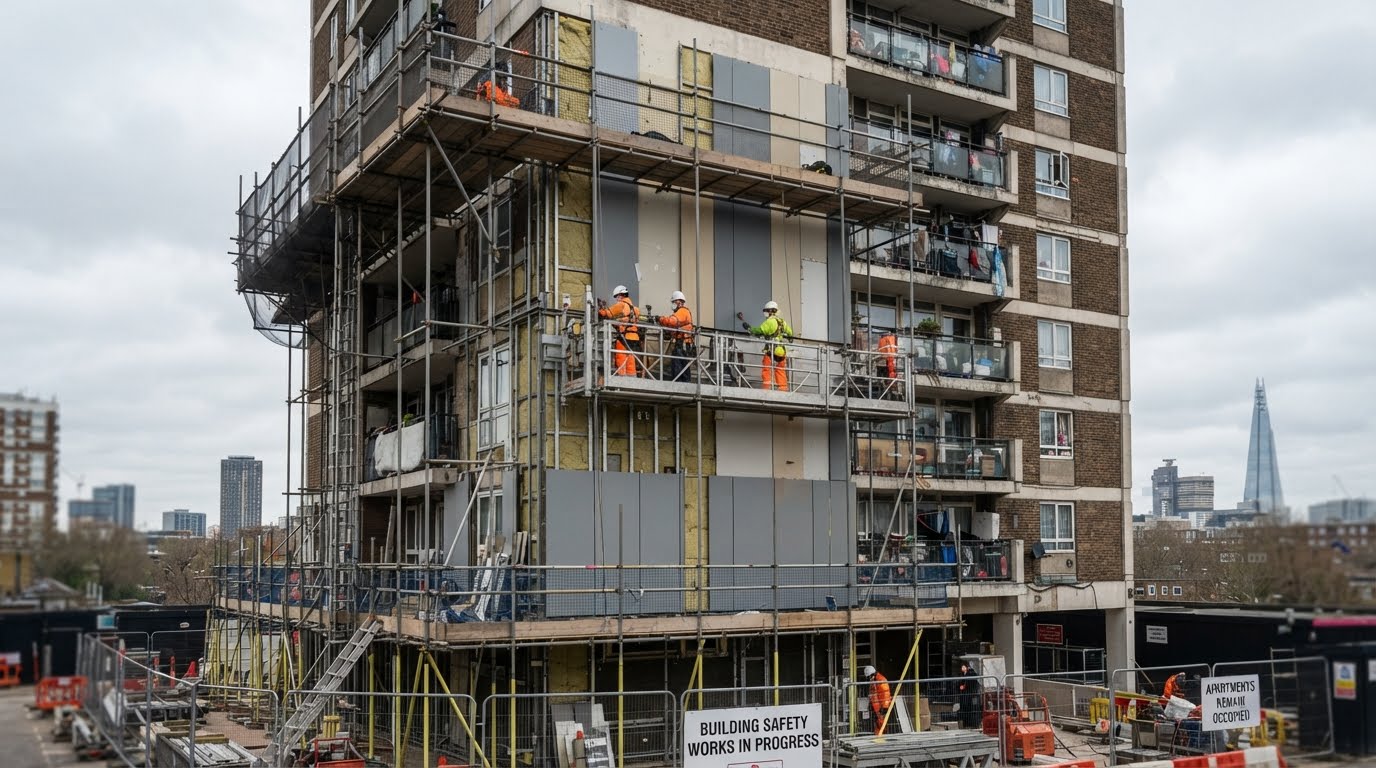
More than 470 additional buildings have completed remediation
The government says progress has been made under its Remediation Acceleration Plan.
According to the official announcement, more than 470 additional buildings have completed cladding remediation since the plan was published.
The government estimates that this progress has benefited approximately 35,000 residents.
These figures indicate that remediation work is continuing.
However, the introduction of further legislation also demonstrates that significant challenges remain.
For residents living in affected buildings, the speed and completeness of safety work remain critical concerns.
What could the legislation mean for leaseholders?
Leaseholders have been among those most affected by the building safety crisis.
Some have experienced difficulties selling their flats because prospective buyers and mortgage lenders require evidence that buildings are safe.
Others have faced uncertainty about the timing and cost of remediation work.
The new legislation aims to improve the processes through which building safety problems are identified and addressed.
If the measures operate as intended, affected leaseholders could benefit from clearer responsibilities and more effective enforcement.
However, introducing legislation does not guarantee immediate repairs.
Remediation projects may still require technical assessments, funding arrangements, contractors and regulatory approvals.
Could the Bill affect property values?
Building safety problems can influence property values and marketability.
A flat in a building with unresolved safety issues may attract fewer buyers.
Mortgage lenders may also apply additional requirements before agreeing to finance a purchase.
As a result, some affected homeowners may struggle to sell or remortgage.
Successful remediation can help remove barriers to transactions.
However, the effect on individual property values will depend on the building, local market and financing conditions.
What does this mean for landlords?
Landlords who own flats in affected buildings should pay close attention to developments.
Building safety concerns can affect investment performance in several ways.
These may include:
-
Restrictions on selling or refinancing
-
Higher insurance costs
-
Remediation-related disruption
-
Administrative obligations
-
Uncertainty over future expenditure
-
Tenant concerns about building safety
Landlords should establish whether their properties are affected and understand the responsibilities of the building owner or other relevant dutyholders.
They should also maintain accurate records of building safety communications and remediation progress.
What about freeholders and managing agents?
Freeholders, building owners and managing agents may also be affected by changes to the legal framework.
Their responsibilities can include coordinating safety assessments, communicating with residents and facilitating remediation work.
The new proposals are intended to strengthen accountability and improve the identification of responsible parties.
However, obligations differ depending on the building and the legal role of the organisation involved.
Professional legal and building safety advice may be necessary.
Will the new legislation solve the cladding crisis?
The introduction of the Bill represents a further attempt to address longstanding problems.
However, legislation alone cannot complete remediation work.
Practical challenges remain, including the availability of specialist contractors, technical disagreements and the coordination of complex building projects.
There are also concerns about the administrative burden associated with new regulatory requirements.
The effectiveness of the proposed measures will depend on how they are implemented and enforced.
What should affected homeowners do?
Residents concerned about unsafe cladding should obtain accurate information about their building.
This may involve contacting the freeholder, managing agent or relevant building safety representative.
Homeowners should establish whether a building safety assessment has been completed and whether remediation work is planned or underway.
They should also retain relevant correspondence and seek independent advice before agreeing to significant financial commitments.
For those considering selling or remortgaging, early communication with a mortgage adviser or lender may help identify potential difficulties.
What happens next?
The Bill must proceed through the parliamentary process before it can become law.
During that process, its provisions may be debated, scrutinised and amended.
Further guidance may be issued if and when the legislation receives Royal Assent.
Until then, existing legal obligations remain applicable.
Property owners, landlords and managing agents should monitor official updates rather than assuming that proposed requirements are already enforceable.
Conclusion
The introduction of the Building Safety (Remediation of Unsafe Cladding etc) Bill marks another significant development in the government's response to the building safety crisis.
By seeking stronger accountability and more effective remediation processes, the government hopes to accelerate progress and reduce the uncertainty facing affected residents.
However, the ultimate measure of success will be whether unsafe buildings are repaired more quickly and residents can live, sell and remortgage with confidence.
For the property sector, the message is clear: building safety remains a major regulatory, financial and operational issue, and the new legislation could bring further changes to how remediation responsibilities are enforced.
Source: Ministry of Housing, Communities and Local Government, announcement published 14 October 2026.

0 Comments
No comments yet. Be the first to share your thoughts.