
The BRRR Strategy Explained
By Benjamin Owoicho Adah | August 2, 2026
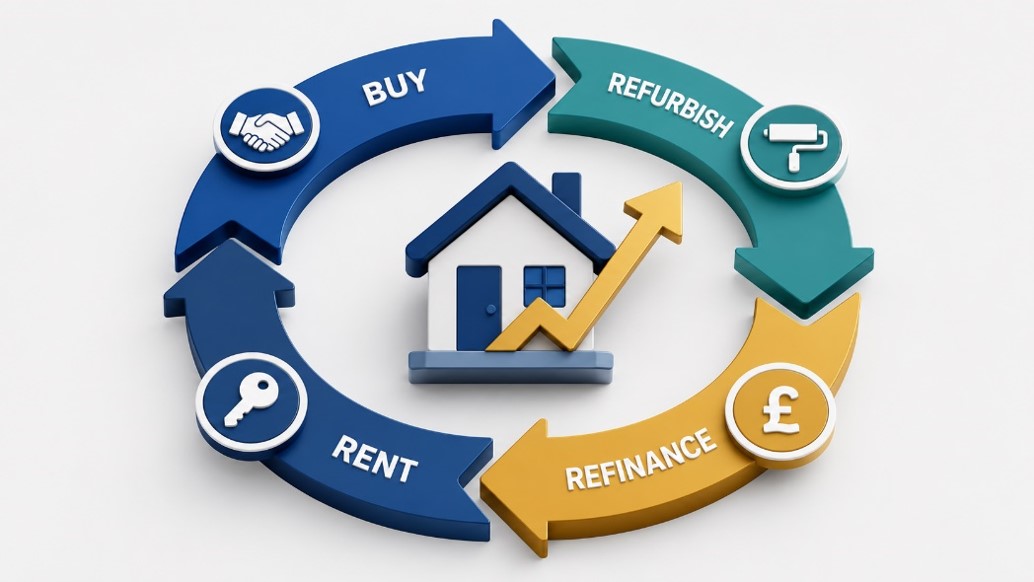
The BRRR strategy — Buy, Refurbish, Refinance, Rent — is one of the most powerful methods for building a property portfolio.
It allows you to recycle your initial capital, pulling your deposit out of one property and using it to fund the next. Done right, you can build a substantial portfolio with limited ongoing cash investment. It is a real estate method where you buy a cheap property, fix it up to raise its value, get a new mortgage on the higher value to pull out your cash, and rent it out to make monthly income. [1, 2, 3]
This guide explains the BRRR strategy step by step.
What is BRRR?
BRRR is a property investment strategy that focuses on adding value to create equity and release capital for further investments.
Core Steps of BRRR
1. Buy
- Find a property priced below market value [13].
- Look for auctions, off-market deals, or motivated sellers.
- Ensure the purchase price leaves room to build equity. [1, 2, 3, 4, 5]
2. Refurbish
- Fix up the property to increase its worth.
- Focus on high-return updates like kitchens and bathrooms.
- Keep renovation costs low and fit for the area. [1, 2]
3. Refinance
- Get a new mortgage based on the new, higher value of the home.
- Pull out your original cash or deposit.
- Leave just enough money tied up to satisfy the lender. [1, 2, 3]
4. Rent
- Place reliable tenants inside the fixed-up home [13].
- Collect monthly rent to pay off the mortgage and expenses.
- Generate steady cash flow while preparing for the next deal. [1, 2, 3, 4, 5]
Major Risks to Keep in Mind
- Cost overruns: Renovations often cost more than planned.
- Low valuations: The bank might value the home lower than expected.
- No early income: You earn zero rent while the home is under repair.
- Loan rate changes: Higher interest rates can reduce how much you can borrow. [1, 2, 3, 4, 5]
The goal is to buy at a discount, add value through renovation, and release the capital you invested, leaving a profitable rental property with minimal money tied up.
Step 1: Buy
The first step is to purchase a property below market value. Common sources:
- Auctions.
- Motivated sellers (divorce, debt, inheritance).
- Properties needing significant renovation.
- Off-market deals.
Key Principle: You must buy well. If you pay full market value, there's no equity to release later.
Step 2: Refurbish
Refurbishment is where you add value. The goal is to increase the property's market value beyond the cost of the renovation.
High-ROI improvements:
- Kitchen and bathroom updates — can boost value by up to 20%.
- Creating open-plan living spaces.
- Loft or garage conversions — adding bedrooms.
- Energy-efficient upgrades — insulation, double glazing.
- Decorating and modernising.
Golden Rule: Don't over-improve. The refurbishment should be cost-effective and appropriate for the neighbourhood.
Step 3: Refinance
Once refurbishment is complete and the property is tenanted, you refinance the property at its new, higher value.
Example:
- Original purchase price: £150,000
- Refurbishment cost: £20,000
- Total investment: £170,000
- New valuation: £200,000
You remortgage at 75% of £200,000 = £150,000.
Result: You've recouped your £150,000 purchase price, leaving the £20,000 refurbishment cost plus equity in the property.
Step 4: Rent
The property is now let out to tenants, generating rental income. The mortgage is covered by the rent, providing cash flow while you move on to the next deal.
The Magic of BRRR: Releasing Capital
The key advantage of BRRR is the ability to pull your deposit out and reuse it.
Example:
- You put down a £37,500 deposit on a £150,000 property (25%).
- After refurbishment, it's worth £200,000.
- You refinance at 75% = £150,000.
- This repays your original £112,500 mortgage and releases your £37,500 deposit.
You now have your deposit back to use on the next property, while retaining the £200,000 property with a £150,000 mortgage — leaving £50,000 equity.
Risks of the BRRR Strategy
1. Refurbishment Costs Overrun
The most common risk. Always budget a contingency of at least 15-20% for renovation costs.
2. Valuation Disappointments
The property may not revalue as high as you expect. This can trap your capital in the property.
3. Cash Flow Pressure
During refurbishment, the property generates no income. You need cash reserves to cover mortgage payments and other costs.
4. Interest Rate Changes
Rates could rise between purchase and refinance, reducing the amount you can borrow.
5. Planning and Licensing
Major structural changes may require planning permission. HMOs require specific licensing. [1, 2, 3, 4, 5]
Who is BRRR For?
- Investors with some capital and renovation experience.
- Those willing to take on project management.
- Investors wanting to scale quickly.
- Those who can handle higher risk for higher returns.
BRRR is NOT for:
- Absolute beginners.
- Passive investors.
- Those with limited cash reserves.
BRRR is a powerful but demanding strategy. Success requires buying well, renovating efficiently, and navigating the refinancing process smoothly.
When it works, it's one of the fastest ways to build a substantial property portfolio with limited ongoing capital.