
Rising Bond Yields Add Pressure to UK Property Finance
By Ben Adah | October 3, 2026
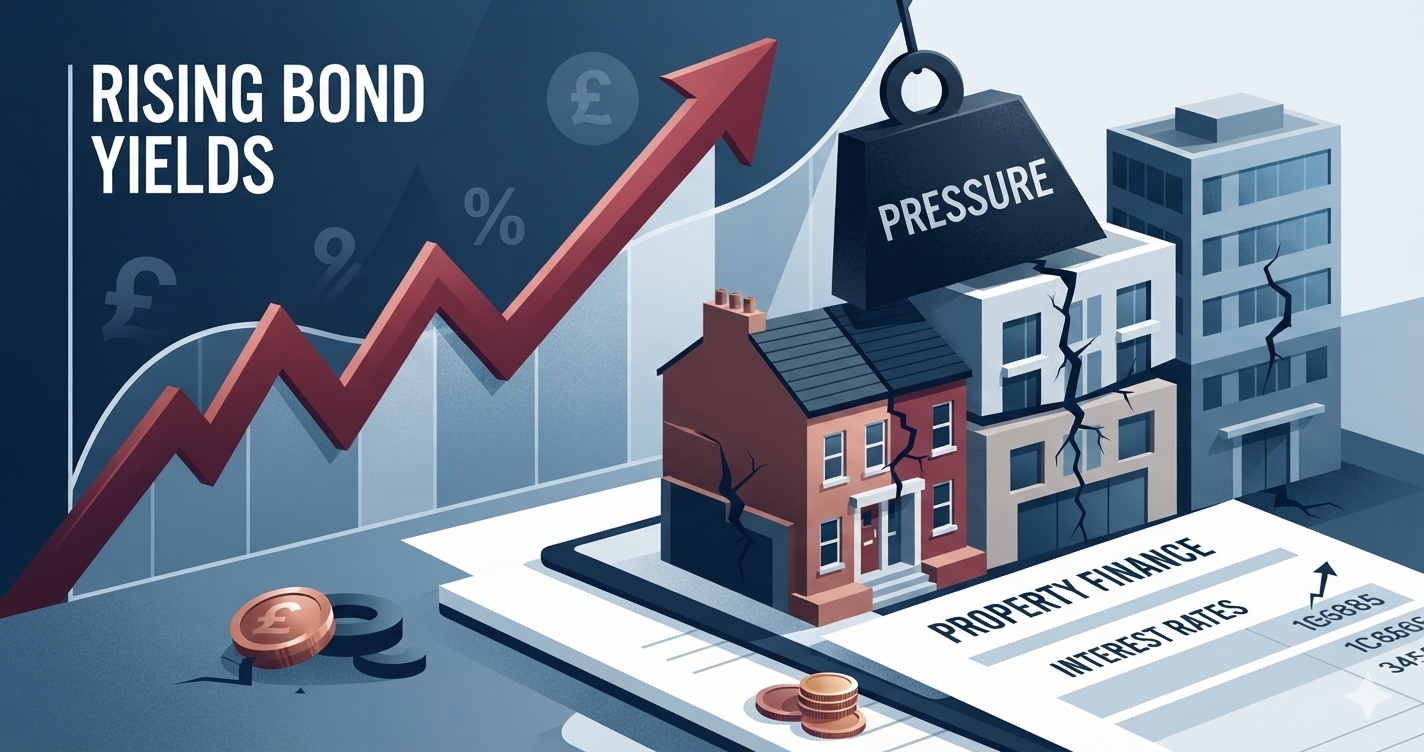
The UK's 30-year government bond yield reached 6% on 1 October, its highest level since 1998, amid a wider sell-off in global government bonds.
Higher gilt yields matter to the property sector because government borrowing costs influence the wider cost of finance. Developers, investors and commercial property owners often depend on debt markets to fund acquisitions, refinancing and construction.
The latest developments therefore arrive at a sensitive point for the property industry.
Mortgage rates have also remained elevated. Rightmove's latest figures put the average two-year fixed residential mortgage rate at 5.50% and the five-year rate at 5.48% on 30 September.
Commercial property finance is also continuing to move through a busy period. Recent transactions include major development and refinancing facilities, demonstrating that lenders remain active while becoming increasingly selective about individual projects and assets.
For developers, higher financing costs can affect project viability, development timelines and required returns. For existing investors, refinancing costs may become an increasingly important consideration as fixed-rate borrowing reaches maturity.
The combination of higher bond yields, mortgage costs and subdued house-price growth means financing conditions are likely to remain a major theme for UK property businesses during the final quarter of 2026.