
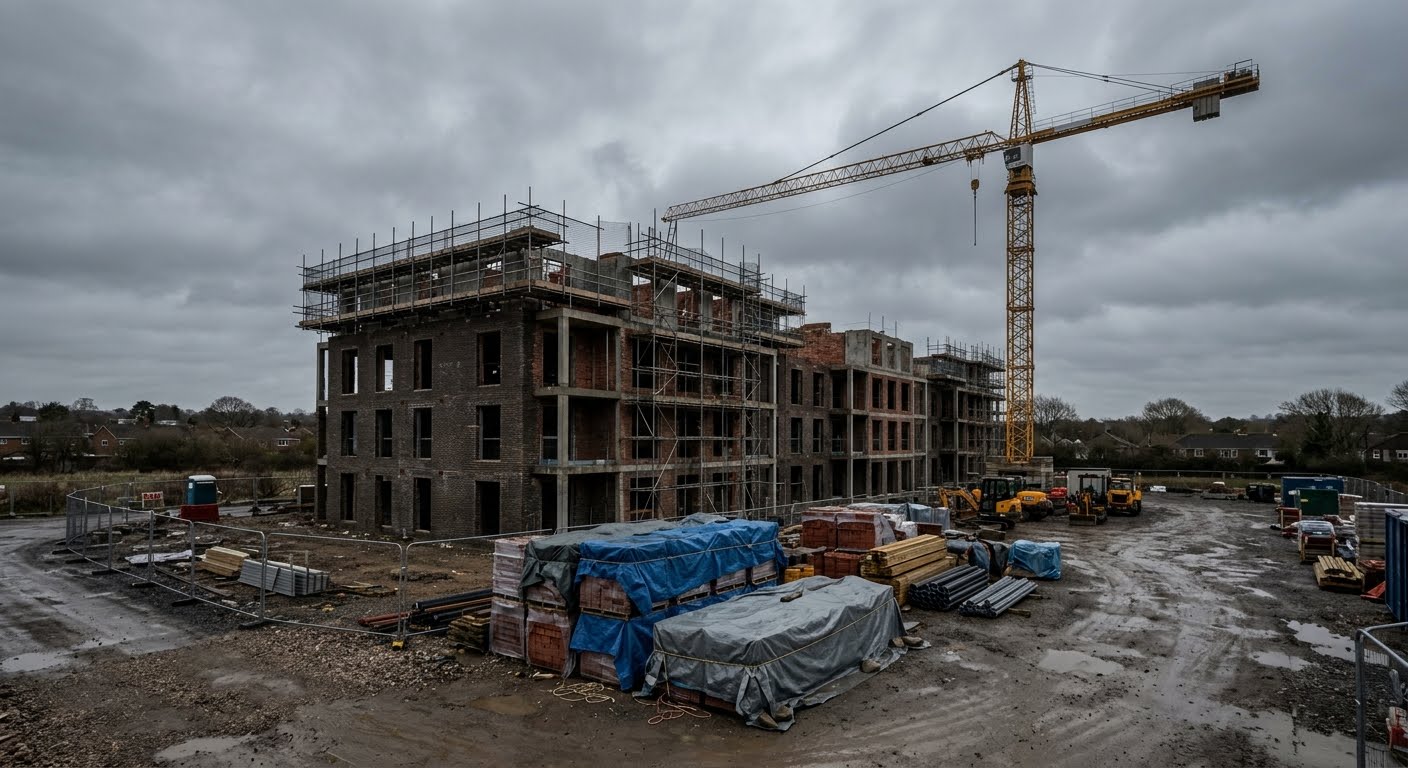
New figures prepared by Savills for Real Estate show that construction started on just 4,696 build-to-rent homes in the 12 months to September 2026, compared with 12,674 during the corresponding period a year earlier. The decline was even more pronounced outside London, where regional starts dropped by 78%, from 10,232 to 2,275 homes.
The figures highlight growing pressure on developers as construction costs, financing expenses, planning delays and regulatory uncertainty continue to affect the viability of new residential schemes.
Completions continue to exceed new construction starts
Although the sector is still delivering completed homes, the gap between completed developments and newly started projects is becoming increasingly concerning.
During the 12 months to September 2026, 21,979 build-to-rent homes were completed, representing a 21% increase from the 18,204 completed in the previous year.
However, this marks the eleventh consecutive quarter in which completions have exceeded new construction starts. The number of BTR homes under construction has consequently fallen by 30% nationally over the year.
London recorded a 28% reduction in homes under construction, while regional markets experienced a 30% decline.
The contrast suggests that the sector is currently delivering projects that were already in its development pipeline, while replacing fewer of them with new schemes.
Why are developers slowing down?
Real Estate identifies several factors affecting development viability.
Higher construction and financing costs are making it more expensive to deliver new rental housing. Developers must also contend with planning delays, regulatory requirements and uncertainty surrounding future rental-sector policy.
These pressures can make it difficult for investors to achieve the returns required to justify committing capital to new developments.
The report also highlights a 9% quarterly reduction in schemes at the detailed planning application stage between Q2 and Q3 2026. Although the number of consented units increased slightly year-on-year, the decline in schemes progressing through detailed applications could affect the longer-term supply pipeline.
What does this mean for tenants and property investors?
A sustained reduction in new BTR development could have consequences for both rental supply and investment opportunities.
For tenants, fewer new professionally managed rental homes entering the market could limit the availability of modern accommodation in areas where demand remains strong. If demand continues to exceed supply, rental affordability may come under further pressure.
For investors, the figures present a more complicated picture. Existing operational BTR properties may become more strategically valuable if fewer competing developments are delivered. However, investors considering new projects must assess construction costs, borrowing conditions, planning risks and achievable rental income carefully.
The regional decline deserves particular attention. Build-to-rent has the potential to provide professionally managed rental housing outside London, but the 78% fall in regional starts suggests that these markets are facing particularly difficult development conditions.
Industry calls for government intervention
Real Estate has called for targeted government measures to improve the financial viability of new rental developments.
Its proposed interventions include restoring Stamp Duty Land Tax multiple dwellings relief for high-density housing and introducing VAT changes intended to reduce development costs.
The organisation argues that the government needs to support all parts of the housing market if it is to address the national housing shortage.
Despite the slowdown, build-to-rent remains a significant part of the UK housing market. The sector accounts for approximately 8% of new homes, while investors continue to commit capital to operational properties.
In the single-family rental market, almost £300 million has been committed to suburban development across five English regions.
The outlook for build-to-rent
The latest figures do not suggest that investor interest in rental housing has disappeared. Rather, they indicate that the cost and risk of delivering new developments are increasingly difficult to manage.
The distinction is important: investment in existing rental assets can continue even while new construction activity contracts.
The government's policy response, the cost of borrowing and the speed at which planning and regulatory bottlenecks are addressed will all influence the sector's next phase.
For property investors, developers and policymakers, the central question is whether the current pipeline can be replenished quickly enough to prevent today's reduction in construction starts from becoming tomorrow's rental housing shortage.
Sources

0 Comments
No comments yet. Be the first to share your thoughts.